Drainage excavation
Correcting wet yards and basements common near the Rouge corridor and low-lying blocks.
Site grading, trenching, and land clearing in Dearborn Heights, MI. Dig planning built for the area's varied clay soils and Rouge-corridor drainage.
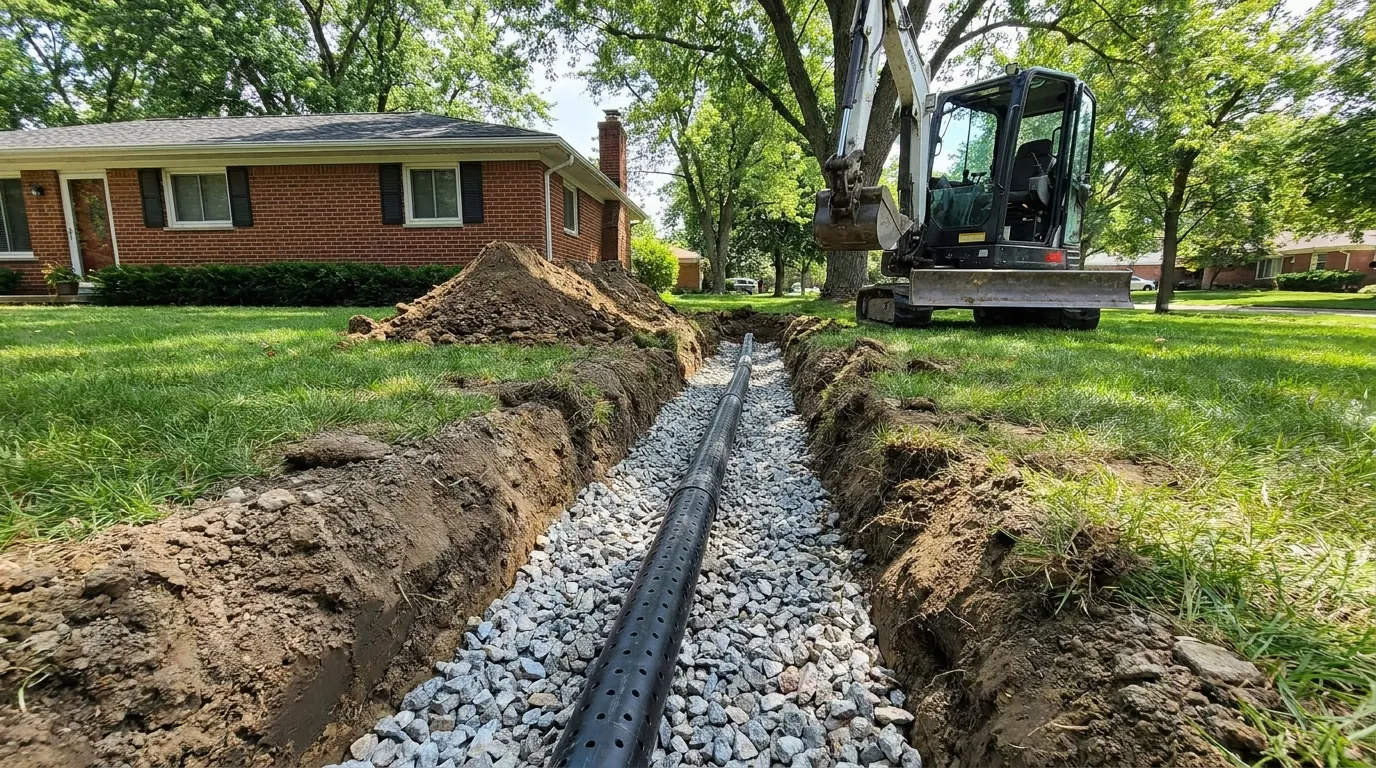
Dearborn Heights wraps around the western edge of Dearborn and is split by the Rouge River corridor, which shapes how water moves across a lot far more than most homeowners expect. Parcels closer to the river branches and low-lying pockets can sit on wetter ground, while higher blocks drain more predictably. Where your lot falls in that pattern changes everything about a drainage or foundation dig.
The soils here are the same sandy-to-clay glacial mix found across the region, but Dearborn Heights sees more variation lot to lot. One parcel might have workable sandy loam near the surface; a neighbor's could turn to stiff clay a foot down. We test and plan for what is actually in the ground rather than assuming, because clay content decides trench stability and how we handle spoil.
Housing here spans decades, from post-war ranches to newer infill. Older properties often carry drainage problems that were never solved — wet basements, soggy yards after snowmelt — and those usually trace back to how the original lot was graded.
Excavation work suited to Dearborn Heights' varied soils and drainage.
Correcting wet yards and basements common near the Rouge corridor and low-lying blocks.
Regrading lots so snowmelt and rain move away from the house instead of pooling.
Running utility and drain lines through mixed soils that change depth by depth.
Digging for additions and rebuilds with shoring matched to the clay content on site.
Describe the problem or the project. We will assess how your lot's position and soil affect the work before anything is scheduled.
Serving Dearborn Heights and the greater Dearborn area.
The Rouge River corridor runs through the community, and lots near its branches or in low pockets sit on wetter ground. Combined with clay that holds water, that produces the soggy yards and damp basements many older homes here deal with.
It can. Dearborn Heights sees more variation than neighboring areas — sandy loam on one parcel, stiff clay a foot down on the next — so we plan each dig around what is actually in that ground.
Often, yes. Many wet-yard problems trace back to original grading that pitched water toward the house. Correcting the slope, sometimes with added drainage, is a common fix.