Site Grading in Dearborn, MI
Site grading and land grading in Dearborn, MI. We shape lots so water runs away from structures across sandy-to-clay glacial soils.
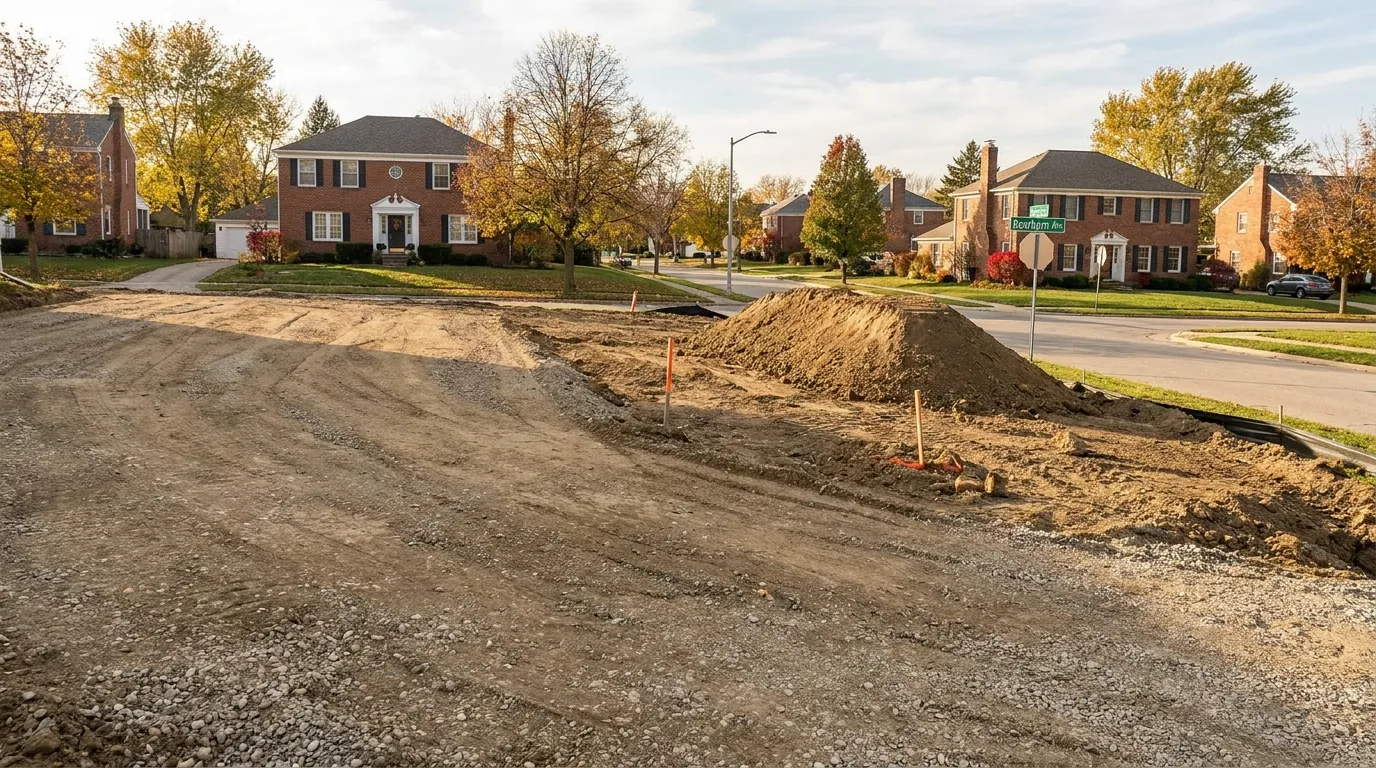
Why grading matters here
Grading is the work of shaping the surface of a lot so water drains away from buildings and toward the places it should go. On a flat Dearborn parcel, the difference between a dry basement and a wet one often comes down to a few inches of fall across the yard. As a grading contractor working these soils, our job is to establish that fall and hold it with properly compacted material.
The warning signs that a site needs grading are usually visible after a storm: puddles that sit for a day or more, soggy low spots near the house, mulch and topsoil washing toward the foundation, or a downspout that dumps into a depression instead of draining off. New construction almost always needs grading before landscaping, and older lots that have settled often need it re-established.
This is one piece of a larger site-work picture. Grading pairs closely with drainage excavation when surface slope alone can't move the water, and it follows land clearing on lots that still have stumps, brush, or old fill in the way.
How the work goes
Every lot is different, but a grading job in Dearborn generally follows this sequence.
-
Walk the site and read the water
We look at where water enters the lot, where it pools, and where it can legally and safely leave. Existing structures, property lines, and the street all set the limits on where fall can go.
-
Set target elevations
We establish the finished slope — commonly a fall away from the foundation across the first several feet — and the high and low points that tie the yard into surrounding grade.
-
Cut, fill, and move material
Using a dozer, skid steer, or grader depending on lot size, we cut down high areas and fill low ones. Sandy soils move and compact differently than the clay pockets common here, so material handling changes across a single lot.
-
Compact and finish
Fill is compacted in lifts so it doesn't settle later and undo the slope. We finish the surface smooth and ready for topsoil, seed, sod, or paving.
Local soil and season
Dearborn sits on glacial soils that run from sand to heavy clay, sometimes within the same lot. Sandy areas drain fast but can slump if not compacted; clay sheds water and holds it at the surface, which makes correct slope even more important. Reading which soil you're working in changes how much fall you need and how the fill is placed.
Lake-effect moisture keeps the ground damp through much of the year, and hard winter freezes heave saturated soil. Grading that ignores drainage will re-fail after a few freeze-thaw cycles. We grade with the wet season and the freeze in mind, which is why compaction and a clear outfall for the water matter as much as the finished look.
Get your lot graded right
If water is sitting where it shouldn't, or you're prepping a lot for building, reach out and describe what you're seeing. We'll talk through what grading your site would involve.
Serving Dearborn and nearby communities.
Frequently asked questions
How much slope does a yard need away from the house?
A common target is a fall of about six inches over the first ten feet away from the foundation, then a gentler continued slope across the yard. The exact figures depend on your soil and where the water can drain, which is why we set elevations on site rather than by rule of thumb.
Will graded fill settle and undo the work?
It can if it isn't compacted properly. We place fill in lifts and compact each one so the finished slope holds through the freeze-thaw cycles common in this climate.
Do I need grading if I'm not building anything?
Often, yes. Standing water, a wet basement, or erosion toward the house are all grading problems even on an established lot. Re-grading corrects settled or poorly shaped ground.
Can grading fix a wet basement by itself?
Sometimes. Surface grading that moves water away from the walls solves many wet-basement problems. When the water table or subsurface flow is the issue, grading is combined with drainage excavation to carry it off.