Gravel Driveway Installation in Dearborn, MI
Gravel driveway installation in Dearborn, MI. Proper base, grade, and drainage so the surface drains and holds through freeze-thaw.
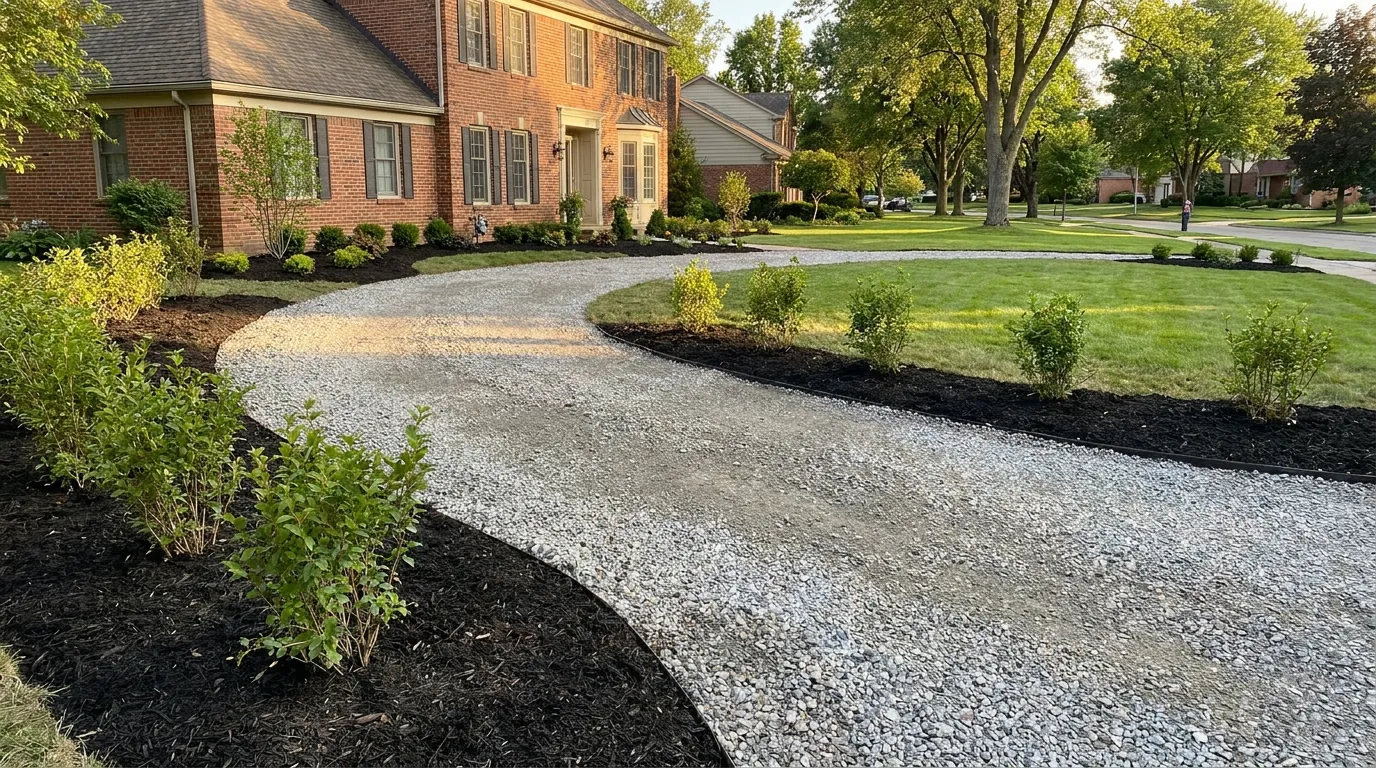
More than dumping stone
A gravel driveway that lasts is built in layers on a prepared base, shaped to drain, and edged to stay put. Stone dumped on soft or ungraded ground turns to ruts and potholes within a season — especially here, where freeze-thaw and steady moisture punish anything built on soft subgrade.
People come to us for a new driveway to a house or garage, a long approach across a rural lot, a parking area, or the repair of an existing gravel drive that's gone to mud and washboard. The fix is almost always the same story underneath: the base and the drainage were never done right.
Driveway work often follows other site work on the same lot. New access frequently starts after land clearing opens the route, and the crown and edge grading tie into the property's overall site grading so water leaves the drive instead of sitting on it.
How we build a gravel drive
The layers below the stone you see are what decide whether the driveway lasts.
-
Prepare the subgrade
We strip topsoil and soft material down to firm ground, then grade and compact the subgrade. Soft, organic soil left in place is what causes ruts and sinking later.
-
Lay base stone
A layer of larger crushed base stone is placed and compacted to spread vehicle loads and lock into the subgrade. On soft or clay ground we add fabric or a thicker base to keep the stone from disappearing into the mud.
-
Crown and shape for drainage
The surface is crowned — higher in the center — so water sheds to the sides instead of pooling and softening the base. Ditching or a swale carries it away where needed.
-
Top with finish gravel
A finer top course is graded smooth for a driving surface that compacts and stays put. Edges are defined so the stone doesn't migrate into the yard.
Building for Dearborn's freeze and moisture
Dearborn's soils and climate are hard on gravel drives. Clay subgrade holds water and turns soft, so the base has to spread loads and the drive has to shed water fast. Where the ground is sandy, drainage is easier but edges wander, so containment matters more. Reading which you have changes the base and the crown.
Hard freezes and frequent freeze-thaw cycles heave saturated ground and break up any drive built without drainage. Water sitting in or under the stone freezes, lifts the surface, and comes back as potholes in spring. That's why we spend the effort on subgrade, base, crown, and edge — a driveway that drains is a driveway that survives the winter.
Want a drive that lasts?
Tell us about your access — a new driveway, a long approach, or a worn-out gravel drive — and we'll talk through the base and drainage it needs.
Gravel driveway installation across Dearborn and nearby towns.
Frequently asked questions
Why does my gravel driveway keep turning to mud?
Almost always because the base and drainage were skipped. Stone laid on soft subgrade with no crown sinks into the ground and holds water. A proper base, crown, and edge are what keep a gravel drive firm and dry.
How thick should the gravel be?
It's not the thickness of the visible top stone that matters most — it's the compacted base beneath it. Depth depends on your soil and how heavy the traffic is, and clay or soft ground needs more base than firm sandy ground.
Can you fix an existing gravel drive instead of rebuilding?
Sometimes. If the base is sound, regrading, re-crowning, and adding fresh top stone can restore it. If it's rutted down into soft subgrade, it usually needs the base and drainage rebuilt to stop the problem returning.
How do I keep the gravel from spreading into my yard?
Defined edges — a graded shoulder, edging, or a slight ditch — contain the stone and give water somewhere to go. We shape the edges as part of the install rather than leaving loose stone to migrate.