Trenching in Dearborn, MI
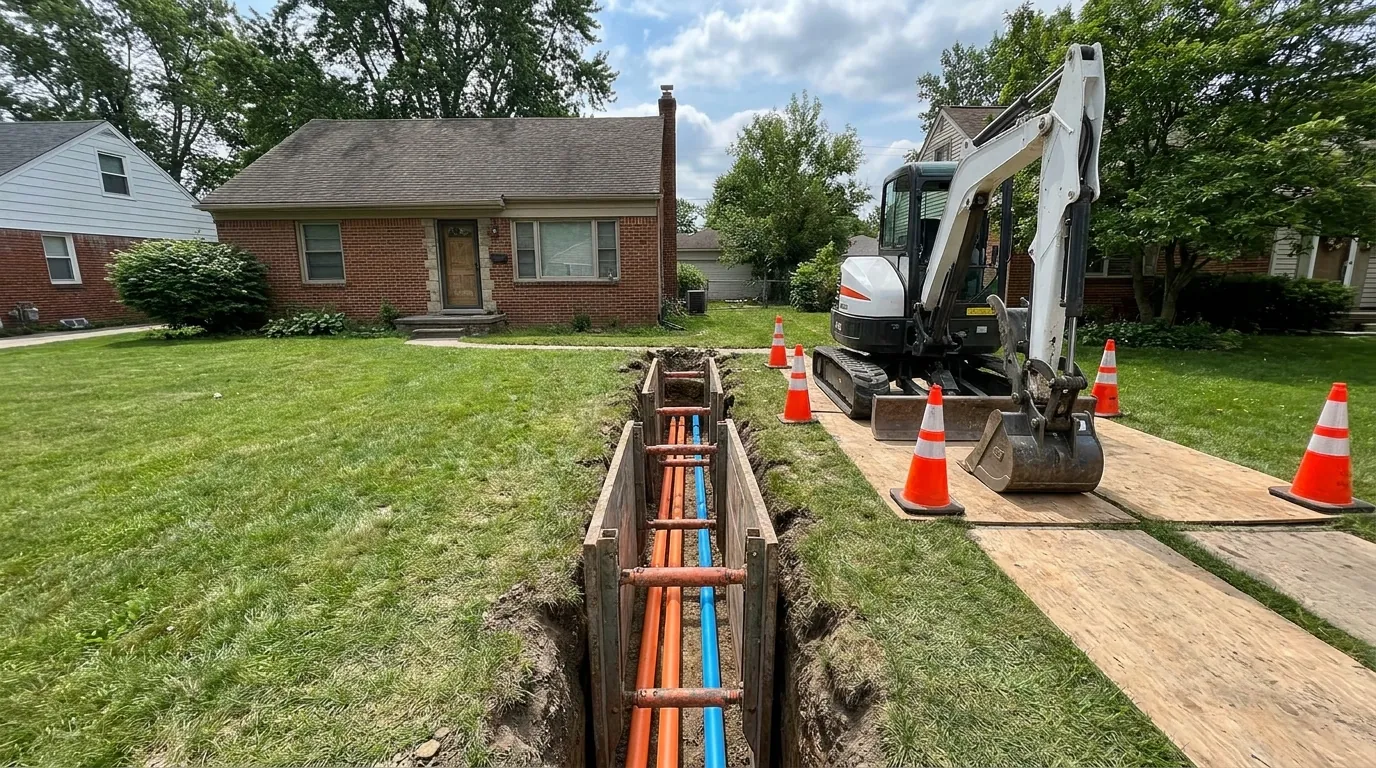
Utility and drainage trenching in Dearborn, MI. Clean, straight, correctly graded trenches through sandy-to-clay glacial soils.
What trenching is for
Trenching is the controlled digging of a narrow channel to carry a utility or a drain line: a water service, sewer or sanitary line, electrical or gas conduit, a downspout tie-in, or a French drain. The trench has to be the right depth, the right width, and — for anything carrying water by gravity — the right slope from end to end.
Depth is not optional here. Water and other freeze-sensitive lines have to sit below the frost line so a hard Dearborn winter doesn't freeze and split them. That means a deeper trench and more careful backfill than many homeowners expect, especially where the soil holds moisture.
Trenching connects directly to other site work. A downspout or footing drain trench feeds into drainage excavation, and utility trenches are often dug in the same phase as foundation excavation on a new build.
How we run a trench
A safe, lasting trench is as much about planning and backfill as it is about the digging.
-
Locate before digging
Every job starts with a Miss Dig call so existing utilities are marked. We plan the route to avoid conflicts and cross other lines at safe separations.
-
Dig to depth and grade
We excavate to the depth the line requires — below frost for water lines — and set a consistent fall on gravity lines so they drain instead of holding water.
-
Bed and lay the line
The trench bottom is bedded with sand or approved material so the pipe or conduit rests evenly. This protects the line from settling and from rocks in the native soil.
-
Backfill and compact
We backfill in lifts and compact so the trench doesn't sink into a visible scar over the next year. Surface is restored to match the surrounding grade.
Soil and frost in Dearborn
The rock content and soil type along a trench line change how it's dug and shored. Sandy runs cut fast but can cave into an open trench, so wall stability matters for both safety and clean work. Clay holds its shape but is heavy, slow, and traps water against a pipe if it isn't bedded properly.
Frost drives the depth. Dearborn's hard freezes reach well into the ground, and any line that must not freeze has to sit beneath that depth with backfill that won't wick water up against it. Getting depth and bedding right the first time is far cheaper than digging up a frozen, split line in February.
Need a line run underground?
Whether it's a new water service, a drain, or conduit to a garage, tell us the route and what it carries. We'll talk through depth, slope, and restoration.
Trenching across Dearborn and the surrounding area.
Frequently asked questions
How deep does a trench need to be?
It depends on the line. Freeze-sensitive lines like water services must sit below the frost depth, which in this climate means a notably deep trench, while shallow drainage or low-voltage lines sit higher. We set depth to the line's requirement and local code.
Do you call for utility locates?
Yes. Every trench begins with a Miss Dig locate so existing gas, electric, water, and communications lines are marked before we break ground. We route the trench to keep safe separation from them.
Why does the trench have to slope?
Any line that carries water by gravity — sewer, drain tile, downspout ties — needs a consistent fall so water keeps moving instead of pooling and settling solids. We grade the trench bottom to hold that slope end to end.
Will the trench leave a scar in my yard?
Backfill settles if it isn't compacted, leaving a sunken line across the yard. We backfill in compacted lifts and restore the surface to reduce settling and blend the trench back into the surrounding grade.