Drainage Excavation in Dearborn, MI
Drainage excavation in Dearborn, MI. French drains, footing drains, and swales that move water off wet, clay-heavy lots.
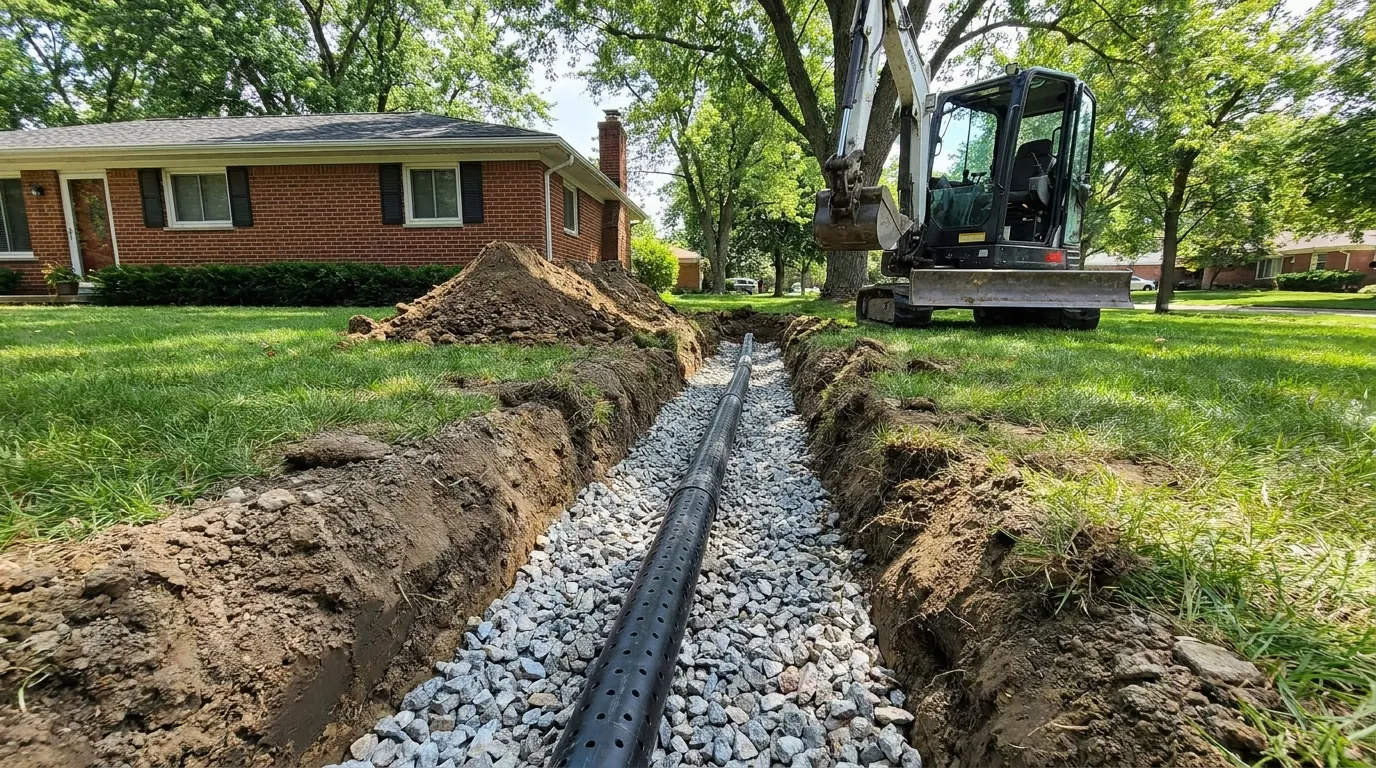
When water won't leave on its own
Drainage excavation is the digging and installation of systems that collect and carry water away — French drains, footing drains, dry wells, catch basins, and swales. When surface grading alone can't move the water, or when it's rising from below, these subsurface systems do the work.
The signs are familiar to anyone on a wet lot: a basement that seeps after every heavy rain, a yard that stays soggy for days, a low corner that never dries out, or water pooling against the foundation. On Dearborn's clay-heavy ground, water often sits at the surface or against walls with nowhere to go, and that's exactly what a drainage system solves.
Drainage rarely works alone. It's usually paired with site grading so the surface sheds water to begin with, and the pipe runs it needs are installed through trenching cut to a steady fall.
How a drainage system goes in
A drainage fix starts with finding where the water comes from and where it can legally go.
-
Trace the water
We identify the source — surface runoff, roof water, a high water table, or flow off a neighboring lot — and find a safe, legal outfall where the water can be released.
-
Excavate the runs to slope
Trenches for drain pipe are dug to a consistent fall so gravity keeps the water moving. Without slope, a drain just holds water underground.
-
Bed pipe in gravel and fabric
Perforated pipe is laid in washed gravel and wrapped in filter fabric so fine clay and sand don't clog it. This is what keeps the system working for years instead of silting shut.
-
Connect, backfill, and restore
Runs are tied to the outfall — a dry well, daylight, or catch basin — then backfilled and the surface restored. We confirm water flows through before closing up.
Why Dearborn lots need drainage help
The glacial soils here range from sand to dense clay, and clay is the reason so many local basements and yards stay wet. Clay drains slowly and holds water against foundations and at the surface. Lake-effect moisture keeps the ground damp much of the year, so there's rarely a long dry stretch for a wet lot to recover on its own.
Hard freezes add another factor. Saturated soil heaves when it freezes, so a drainage system has to be installed at the right depth with the right backfill to keep working through the winter. We plan the outfall, slope, and gravel envelope with those conditions in mind so the system doesn't clog, freeze, or lose its fall.
Tired of standing water?
Describe where the water shows up — the basement, a yard low spot, against the house — and we'll talk through what a drainage system for your lot would involve.
Drainage excavation in Dearborn and surrounding communities.
Frequently asked questions
What's the difference between a French drain and a footing drain?
A French drain collects and carries surface or shallow groundwater away from a wet area of the yard, while a footing drain sits at the base of the foundation to relieve water pressure against the walls. Many wet lots benefit from both, tied to the same outfall.
Why does drainage pipe need gravel and fabric around it?
The gravel envelope lets water reach the perforated pipe freely, and the filter fabric keeps fine clay and sand from washing in and clogging it. Skipping either is why cheap drains silt up and stop working within a few years.
Where does the collected water go?
It needs a legal, safe outfall — daylight on a slope, a dry well, or an approved connection. We identify that during planning, because a drain with nowhere to release just moves the problem a few feet.
Will grading fix my problem without a drain?
Sometimes surface grading is enough to shed water. When the ground stays wet from clay or a high water table, grading and drainage excavation work together — one moves surface water, the other handles what's below.