Drainage excavation
Giving trapped water an outlet on flat, clay-heavy Southgate lots.
Grading, drainage, and gravel driveway excavation in Southgate, MI. Dig planning for the area's flat, clay-heavy Downriver soils.
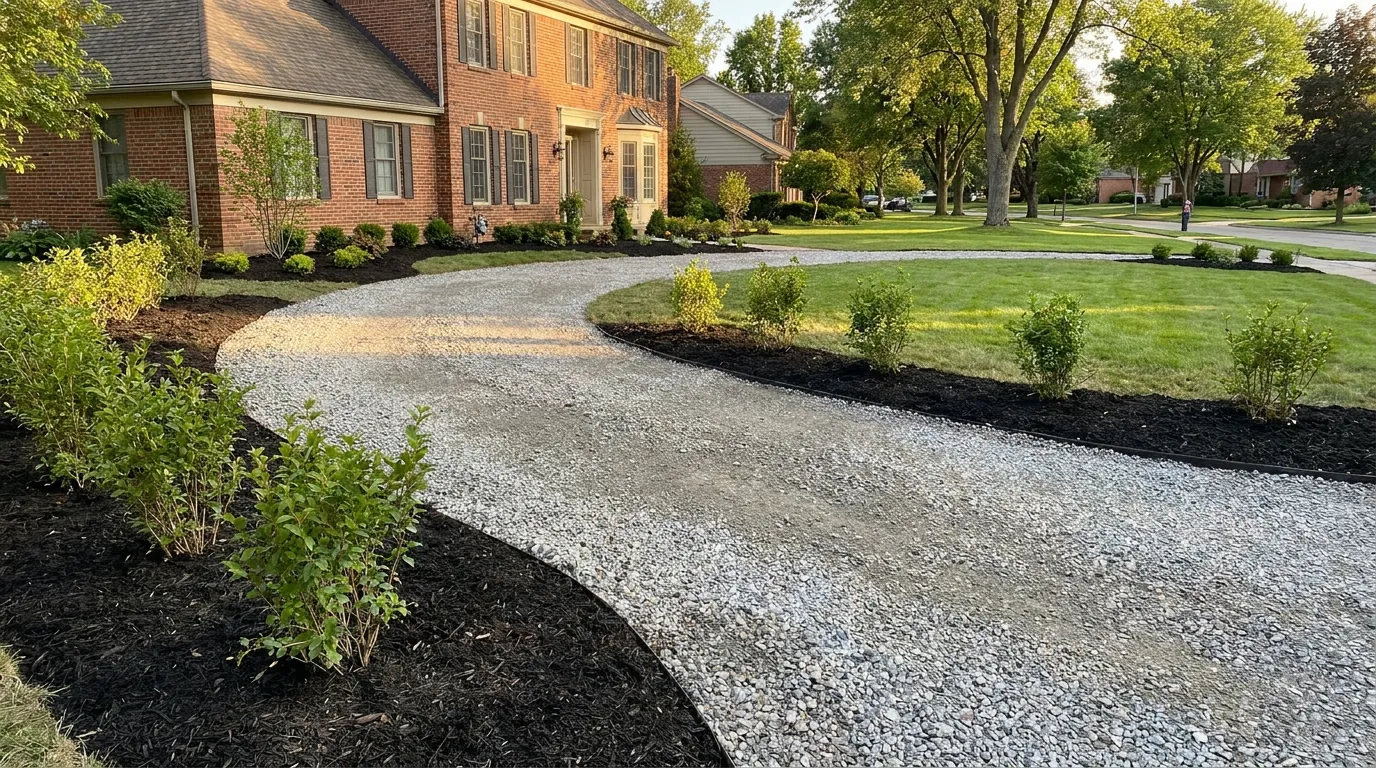
Southgate lies south of Dearborn among the Downriver communities, on the same flat glacial lakebed that shapes so much excavation work in this part of Wayne County. It is a settled suburb of established residential neighborhoods, where most projects are additions, driveways, and drainage fixes on existing lots rather than raw new construction.
The flat terrain and clay-heavy soil are the recurring theme. Clay drains slowly, and with little natural slope to help, water lingers on lawns and against foundations after the region's wet springs and heavy snowmelt. A large share of the calls here come down to moving water — regrading a lot so it drains, or installing drainage to give trapped water an outlet.
Driveway work is common too, and on Southgate's clay it depends entirely on the base. A gravel drive needs a properly compacted foundation of the right materials, or freeze-thaw movement and saturated clay will rut and swallow the stone within a season or two.
Excavation work matched to Southgate's flat, slow-draining lots.
Giving trapped water an outlet on flat, clay-heavy Southgate lots.
Regrading so rain and snowmelt drain away from the house instead of pooling.
Building a compacted base that survives clay and freeze-thaw movement.
Digging for additions and rebuilds on established residential lots.
Tell us what is happening on your lot. We will look at slope, soil, and drainage before recommending an approach or scheduling work.
Serving Southgate and the Downriver area near Dearborn.
The ground is flat and the clay soil drains slowly, so rain and snowmelt have nowhere to go. Regrading or drainage excavation gives that water a path away from the house.
With a properly compacted base and the right materials, a good while. Without one, freeze-thaw movement and wet clay will rut and sink the stone within a season or two.
Usually. We plan drainage and regrading work to disturb existing landscaping as little as possible while still correcting how water moves across the lot.